Sheet mulching
I COPIED
SHEET OR LASAGNA MULCHING
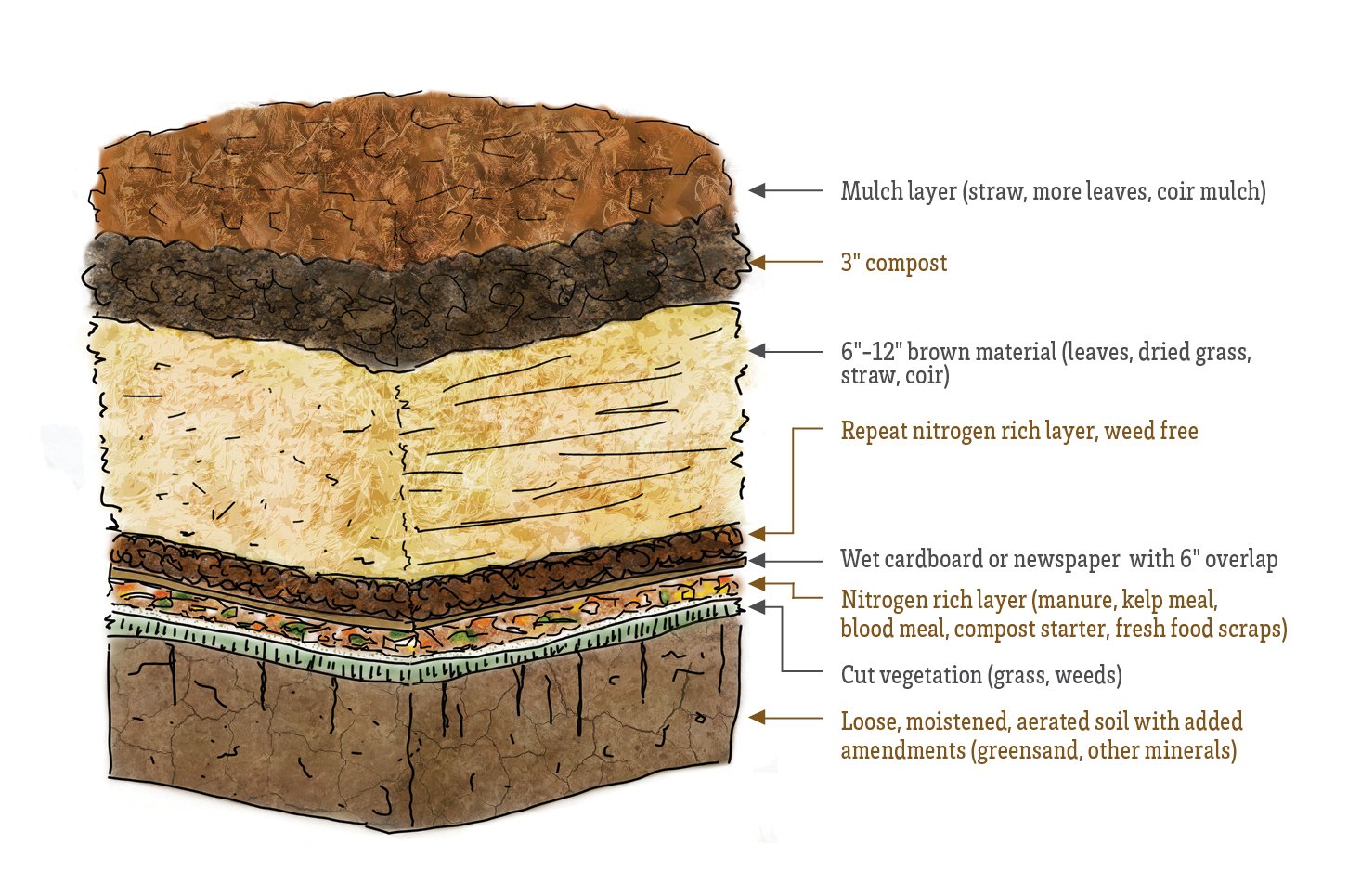
Gather your materials:
Depending on the size of the area you want to cover, you’ll need a decent amount of supplies.
- – Green sand, and any other mineral amendments your soil needs
- Nitrogen rich material – blood meal, fresh manure, Super Hot Compost Starter, fresh food scraps, diluted clean urine
- Cardboard or newspaper. You’ll want enough to overlap the pieces by about 6”. If you are using newspaper, you’ll want it ½”-1” thick
- 8”-10” layer of brown material – dried grass (without seed heads), old leaves, straw
- Compost or quality top soil, enough to cover the area with 2”-3”
- Mulch- more straw, leaves, Gardener’s Mulch Block
The process:
1. Make sure the area to be mulch is decently wet before you start. Rain the night before is good, or water it thoroughly before starting.
2. Chop down any existing vegetation and leave in place.
3. Aerate the area with a ground breaking tool or pitch/broadfork.
4. Amend your soil with the green sand or other mineral amendments. Broadcast over the whole area.
5. Lay down a material high in nitrogen – blood meal, manure, even urine diluted with water. Wet this layer down.
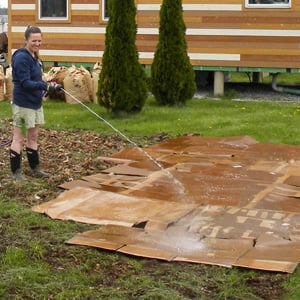 Thoroughly wet the cardboard to speed up decomposition.
6. Weed suppression step! This definitely takes the longest of all the steps. You need to thoroughly wet your cardboard or newspaper as you lay it. With cardboard this will take a while. Do both sides to really wet the cardboard through. Wetting it will help speed up decomposition. Now, lay the cardboard or newspaper down to form the square footage of your planting area. You’ll want to overlap by about 6” to make sure no grass or weeds can poke through.
7. Lay down another layer of material high in nitrogen on top of the cardboard. This will entice the worms and other soil good guys to eat through the cardboard and come up to join the party in your soil. This is also where you might add fresh food scraps. Wet this down.
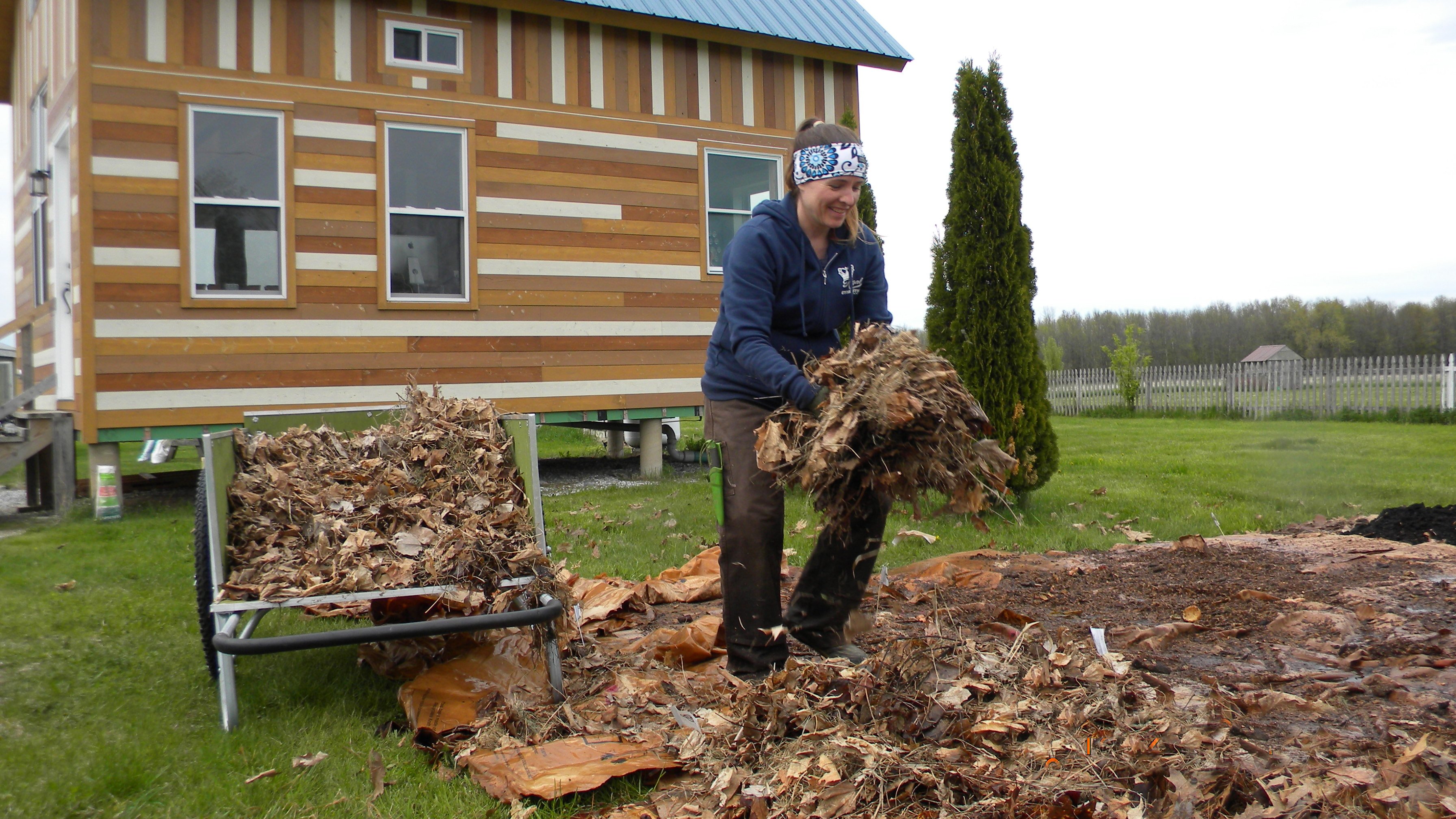
8. Now you will be laying the bulk of your organic material on top of the cardboard. What you are looking for here is dead brown matter. Old dead grasses, strawbale or leaves, are generally what I have seen used. You will want to layer this material on 8-10” thick, and then wet it down to the consistency of a sponge.
9. Here comes a point of difference, depending on whether you got it together enough to do this process in the fall or if you are doing it in the spring. If you managed to get to it in the fall, you are done for now! Let all that goodness sit over the winter and break down. Come spring you should add a layer 2-3” thick of compost down and plant away. You could also lay the compost down now if you are worried about your brown material blowing away.
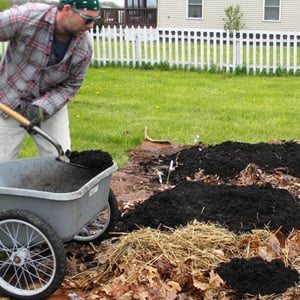 Adding 2-3 inches of compost
10. If you are a procrastinator like me, you probably didn’t get to the process in fall. No fear, you can still plant into these beds, by making some adjustments when you plant. First, layer on the compost on 2-3” thick.


Comments